Keep It Current
Skip to content

What is Green Infrastructure?
Green infrastructure helps reduce overflows, often reduces cost and provides neighborhood amenities. It’s a water management approach that protects, restores or mimics the natural water cycle. Green infrastructure is often soil- or vegetation-based and can include tree planting and preservation, installing porous pavements, and restoring natural landscapes.
Below are some examples of green infrastructure projects in Omaha.
Spring Lake Park Project
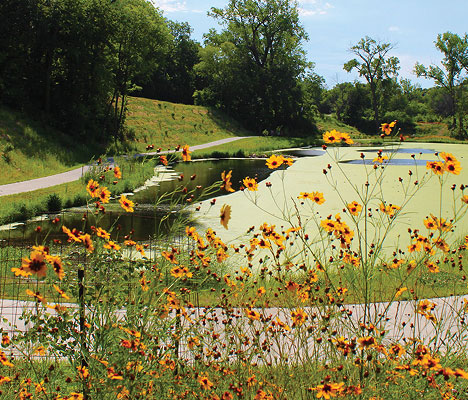
In the late 1800s, Spring Lake Park was a thriving urban park. In the early 1900s, the lake was drained and became a dumping ground for trash, old appliances and tires. A vocal group of community advocates tried for years to bring the “lake” back to Spring Lake Park. The CSO Program, which had included construction of a lake in the original 2009 Long Term Control Plan, collaborated with the neighborhood to address its aspirations. As planning and design for the Missouri Avenue/ Spring Lake Park CSO project developed, the beautification of a neighborhood evolved along with a major water quality improvement project. Through the CSO Program, grants from Nebraska Environmental trust and collaboration with Omaha’s Park Department, the lake, wetlands and a broad range of green elements transformed the area. The incorporation of green infrastructure elements expanded the park’s habitat, fishing and enjoyment, while leading to improved water quality. The project reduced the amount of gray infrastructure and resulted in savings of $5 million.
Lake James to Fontenelle Park Project
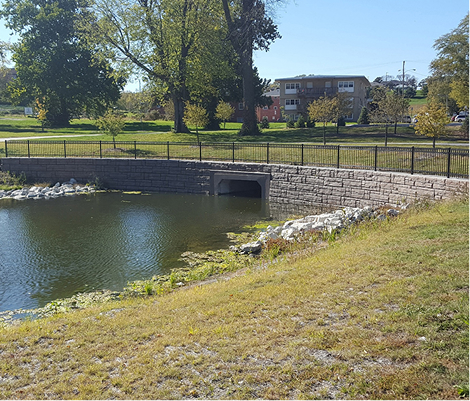
As part of the Lake James to Fontenelle Project, what used to be a little-used golf course is now a sprawling park with walking trails and picnic areas. The park’s lagoon was expanded and deepened, creating changes that naturally collect stormwater, keeping it from getting into the combined sewer and causing overflows to the river. Native vegetation was planted to increase filtration of rainfall into the ground.
Adams Park Project
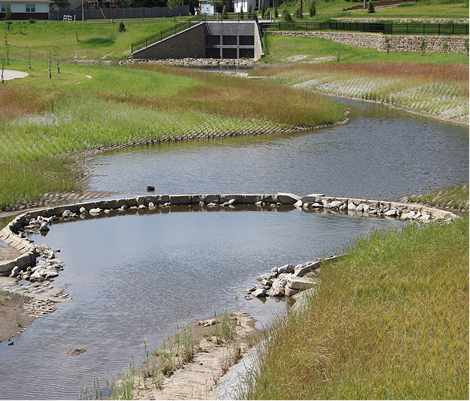
An outgrowth of the North Omaha Villages Revitalization Plan, this project renewed focus on Adams Park and other areas in the community as a catalyst for urban growth and revitalization. The park’s wetlands and detention area were designed to provide maximum practical stormwater storage to reduce combined sewer overflows, while adding community benefits and beautification elements to the park. The wetlands cover around 14 acres. A low dam with emergency spillway was constructed on the north side of the park, near Bedford Avenue, to provide detention volume of up to approximately 77 acre-feet, which will detain a 100-year storm event.

© 2026
Omaha Public Works Department
1819 Farnam St | Suite #600
Omaha, NE 68183

402.444.5220
Looking for the City Of Omaha’s CSO projects?
Visit Omaha CSO